
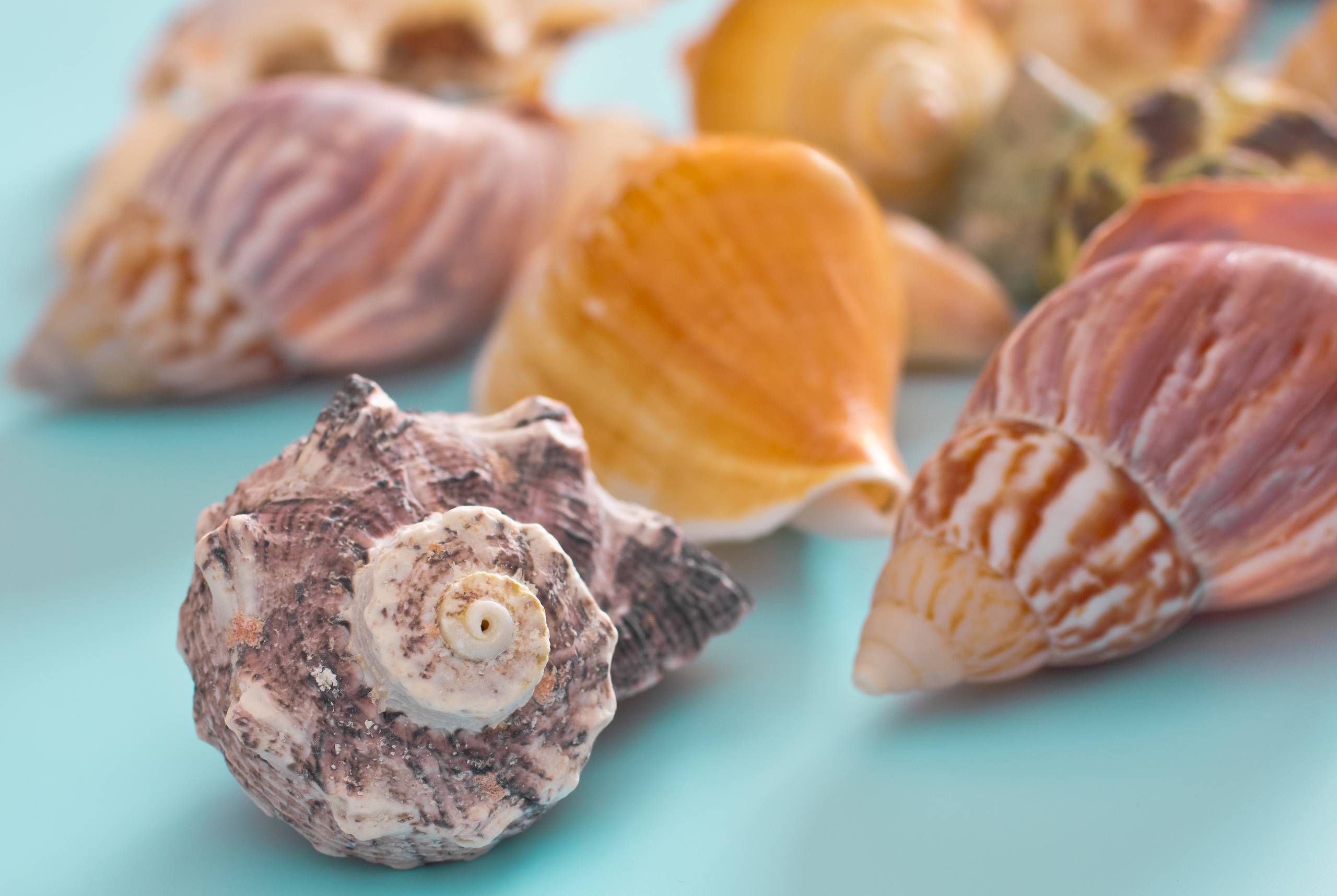
Well-chosen shells are a must, of course. Nowadays, it’s popular to use shells you have collected yourself from the beach, but, if you don’t live near the ocean, you can also buy them. Reputable specialty suppliers will tell you where they were collected. I prefer to collect my own. Low tide is best. Each shell has a story to tell you of the waves and tides that have battered it about, where it came from and how long it took to get there. Of course, I only collect shells that are empty and undamaged. And I like variety. There are so many beautiful types of shells: cowry, scallop, olives, conch, abalone….
If you’ve gathered the shells yourself, you’ll need to wash and clean them. A warm water bath with a tablespoon or so of dishwashing detergent, and a gentle scrubbing with a soft-bristled toothbrush should take care of the sand and most of the grime. If barnacles or calcium deposits remain, you can soak the shells in a solution of equal parts water and white vinegar. White vinegar will not harm the shell’s shine, but you should avoid letting the shells soak too long, as the acid in the vinegar can damage the nacre (the shiny, iridescent interior of the shell). Allow the shells to air dry in a cool place, away from direct sunlight. Once they’re dry, they’ll be ready to adhere to your project.
Once the shells are clean, it’s time to sort and decide on a design. Some crafters separate their shells into large “focal shells,” “middle-sized shells,” and “shells to fill in with.” Other crafters sort their shells into colors, textures, and shapes. You might find that your pastel rose-colored sunset tellin shells go well with deep purple mussel shells. Your white moon shells might look stunning next to olive-green whelk shells. Sort your shells in a tray or small container so you can mix-and-match shells. You might discover your very own “brand” of shell colors, just like an artist or musician has favorite colors or musical notes.
As the last pre-assembly preparation, any rough edges or other irregularities which could be problematic for the adhesive or for the human hand are lightly sanded or filed. This attention to detail helps to keep the piece looking professional, but is also necessary for a nice tactile experience when viewing a piece meant to hang on a wall. Some producers may also use a clear topcoat to deepen the color and add further protection, but most appreciate the simplicity of the natural shine or matte from the shells. Every choice during preparation will contribute to the ultimate presentation of the panel, whether the effect desired is a brilliant shine, a rougher tropical feel, or an airy mistiness.
To sum it up, selecting and preparing shells is not just a technical exercise; it is a meditative process that gives dignity to the elements and establishes the base for the work to come. Properly executed, it elevates fragments from the sea to their potential status of centerpieces for a permanent creation. The effort and concentration that this initial step demands are never in vain; it heightens the artisan’s relationship with his/her creation and the source of his/her inspiration, guaranteeing that each finished composition will be authentic and meaningful, as only carefully prepared and thoughtfully chosen shells can do. Shell panel art owes its continuity to the attention and respect paid in the initial stages of its development.